Copper Winding Wires

Copper Winding Wires
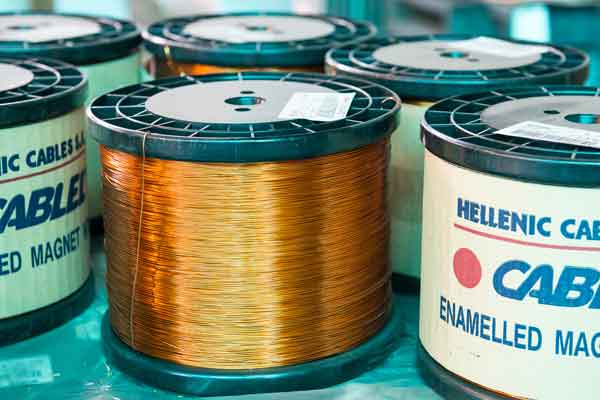
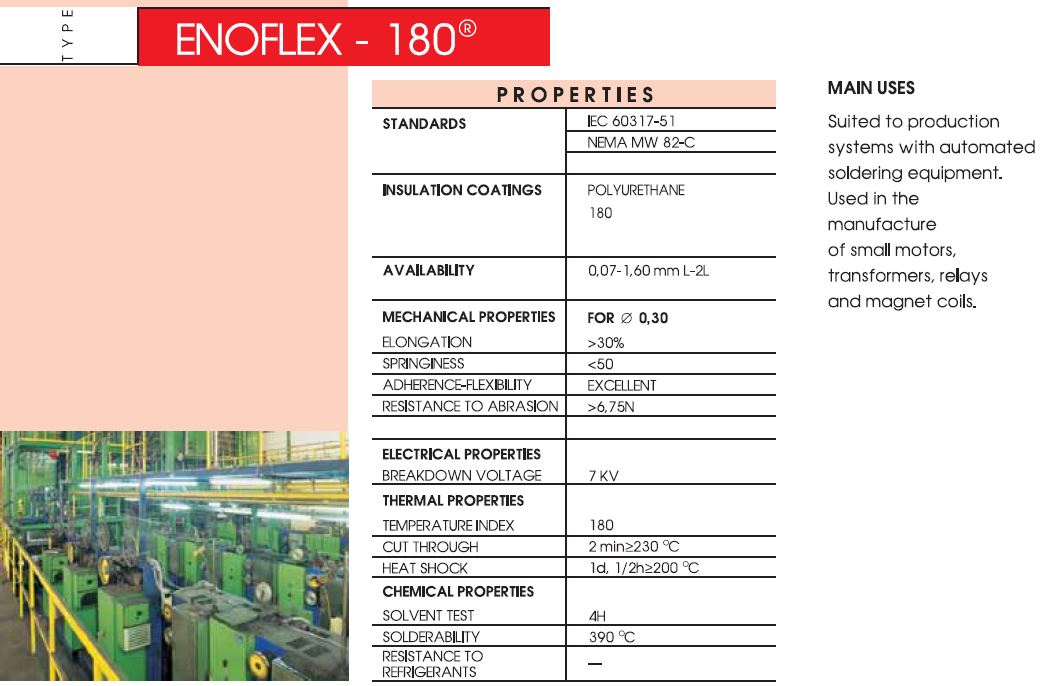
The most suitable materials for magnet wire applications are unalloyed pure metals, particularly copper. When factors such as chemical, physical, and mechanical property requirements are considered, copper is considered the first choice conductor for magnet wire.

Most often, magnet wire is composed of fully annealed, electrolytically refined copper to allow closer winding when making electromagnetic coils. High-purity oxygen-free copper grades are used for high-temperature applications in reducing atmospheres or in motors or generators cooled by hydrogen gas.

Insulation

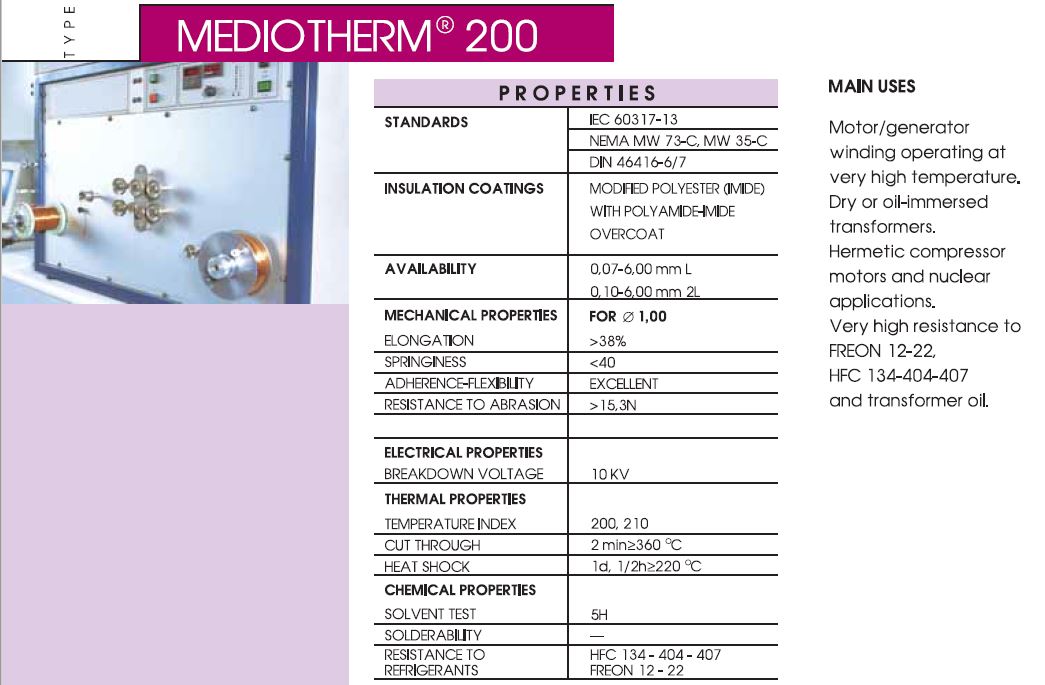
Although described as “enameled”, enameled wire is not, in fact, coated with either a layer of enamel paint nor with vitreous enamel made of fused glass powder. Modern magnet wire typically uses one to four layers (in the case of quad-film type wire) of polymer film insulation, often of two different compositions, to provide a tough, continuous insulating layer. Magnet wire insulating films use (in order of increasing temperature range) polyvinyl formal (Formvar), polyurethanepolyamidepolyester, polyester-polyimide, polyamide-polyimide (or amide-imide), and polyimide.[3] Polyimide insulated magnet wire is capable of operation at up to 250 °C. The insulation of thicker square or rectangular magnet wire is often augmented by wrapping it with a high-temperature polyimide or fiberglass tape, and completed windings are often vacuum impregnated with an insulating varnish to improve insulation strength and long-term reliability of the winding.

Classification

Like other wire, magnet wire is classified by diameter (AWG numberSWG or millimeters) or area (square millimeters), temperature class, and insulation class.

 
Cross-sectional view of AWG33 magnet wire taken using a scanning electron microscope

Breakdown voltage depends on the thickness of the covering, which can be of 3 types: Grade 1, Grade 2 and Grade 3. Higher grades have thicker insulation and thus higher breakdown voltages.

The temperature class indicates the temperature of the wire at which it has a 20,000 hour service life. At lower temperatures the service life of the wire is longer (about a factor of 2 for every 10 °C lower temperature). Common temperature classes are 105 °C, 130 °C, 155 °C, 180 °C and 220 °C.
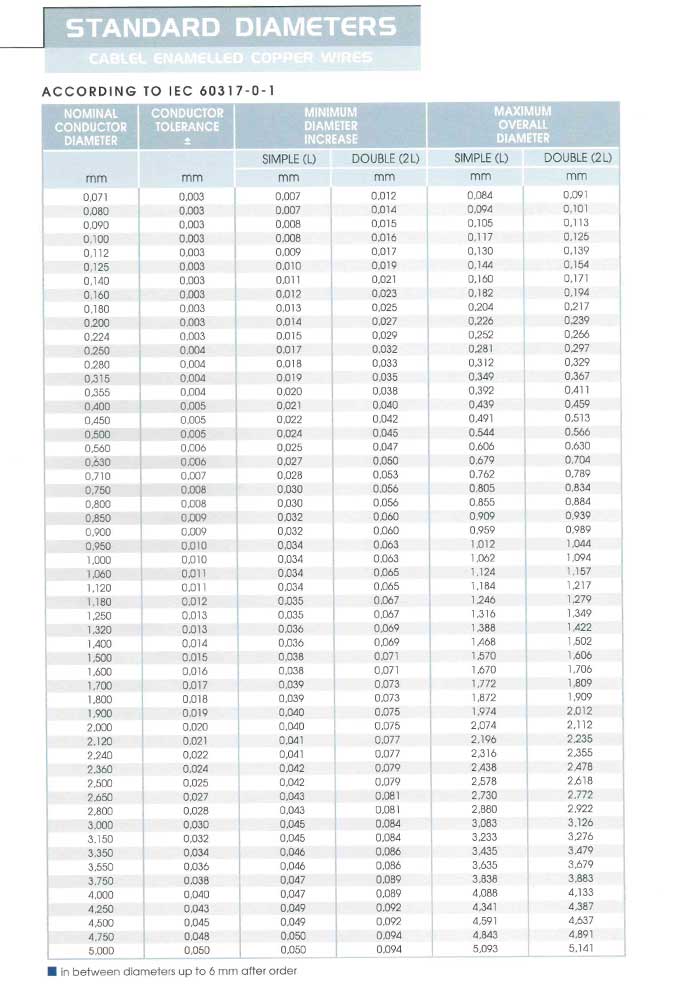
Copper Wire Sizes Available from ODC South Africa –

Please click on image to the right to enlarge. Should you have specific requirements or forecasting available ODC will be happy to discuss options.